Introducing Block Therapy
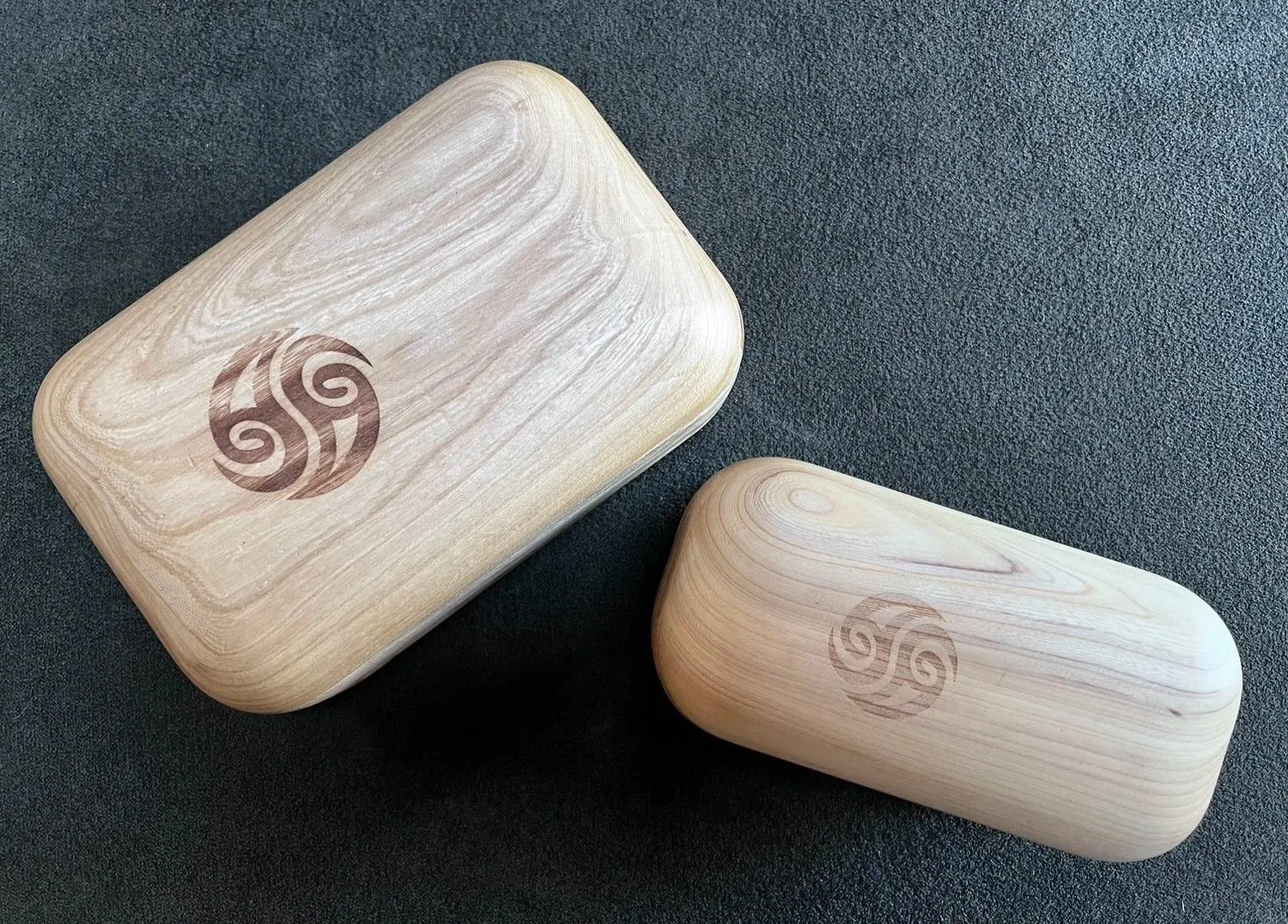
From time to time I share some of my practices to keep my body “fit” for weaving- or otherwise.
I’ve talked about massage, yoga, and tools like the thera-cane in previous posts. This time I’d like to share with you a new tool I discovered last year that has totally changed my morning practice.
It’s called Block Therapy and it is the brainchild of Deanna Hansen.
I don’t even know where to begin - it’s become such a big part of my daily routine.
I discovered Block Therapy about 8 months ago with a video on You tube showing the practice with a rolled up towel instead of a block. Of course, I ended up on their mailing list and discovered I found real value in the content they sent out.
I also got a short sequence - to work with the towel - as a result of adding my email address to their mailing list. I tried some of the routines and continued to use the rolled up towel until this past January when I decided to bite the bullet and bought all 3 of their blocks: the Block Buddy, the Block Baby, and the Paddle. It was not an investment I made lightly!
The blocks come with a pretty extensive starter program and there was plenty to explore in addition to an active forum.
So what does it do? And what’s so great about it? And what does it have to do with tapestry weaving?
Well, lots, really.
You all know we beat our bodies up when we’re sitting at the loom- especially when we’re in that flow, and minutes turn into an hour before we realize it. I do try- and I’m sure you do, too, to get up every 20 to 30 minutes or so - but if that doesn’t happen for whatever reason- our body pays for it- whether the back, the shoulders, the neck, or some place else we’re maybe not even aware of.
And that’s one thing Block Buddy has introduced me to. That our body’s fascia system is so intricately connected that we might think we just need work on neck and shoulders- but it’s a trickle down effecting everything- even - maybe especially the feet- that’s happening all the time.
It’s all about releasing- melting away - the adhesions that form all over our body. Giving our cells more oxygen and room to do their work. (Diaphragmatic breathing is huge in this practice).
And honestly it can be SO relaxing. It all has made such perfect sense to me - so much so that I’ve felt compelled to pass it along.
Here are a couple links to get you started plus I’ve included Google’s quick search AI Overview in case I’ve only managed to be mysterious or confuse you! It’s like nothing I’ve ever encountered.
https://blocktherapy.com/sampler-program-opt-in/
https://www.youtube.com/channel/UCryWbSArmjmNwVhMGB6R5qw
https://blocktherapy.com/starter-package-store/#tve-jump-19c58828a57
AI Overview
Block Therapy is a self-care fascia decompression method designed to relieve pain and improve posture. It involves lying on a handcrafted wooden block while practicing diaphragmatic breathing. This combination of sustained pressure and deep breathing aims to melt through tissue adhesions, improve circulation, and restore the body's natural alignment. [1, 2, 3]
How It Works
Developed by certified athletic therapist Deanna Hansen, the technique operates on the principle that time, gravity, and poor posture cause our bodies to compress. This leads to tight, hardened fascia that restricts blood and oxygen to cells. Block Therapy focuses on three main principles: [1, 2, 3, 4, 5]
Create Space: You lie over a firm, specially shaped wooden tool (like the "Block Buddy") in various positions, typically holding each spot for about 3 minutes. This applies sustained pressure to release fascial adhesions. [1, 2]
Inflate Space: You use conscious, deep diaphragmatic breathing. The breathing generates internal heat, which softens the tissue and directs blood and oxygen into the newly decompressed spaces. [1, 2, 3]
Maintain Space: The practice involves training the body to hold better posture and correct alignment in daily life to prevent the fascia from re-compressing. [1]The Philosophy: Cause Sites vs. Pain Sites
In Block Therapy, the area where you feel pain is often not the actual source of the problem. Because fascia connects the body from head to toe, a restriction in the legs or pelvis may manifest as headaches, jaw tension, or shoulder discomfort. The practice aims to treat the whole body systematically to resolve the root causes of tension. [1, 2]
Benefits & Practices
Proponents of the practice suggest that consistent sessions can: [1, 2]
Relieve chronic aches and back or neck pain.
Improve posture and restore natural alignment.
Stimulate lymphatic and circulatory flow.
Act as a meditative practice by activating the parasympathetic nervous system (the "rest and digest" state). [1, 2, 3]
Getting Started
While the program offers specific custom-designed wooden blocks, beginners can often start exploring the concepts at home using gentler, readily available alternatives such as cork yoga blocks, foam rollers, or tightly rolled-up towels. Many guided routines and programs are available through the Official Block Therapy Website, which offers video classes and tutorials. [1, 2, 3, 4]
Disclaimer: As with any new physical practice, especially one that addresses chronic pain or deep tissue, it is a good idea to consult with a medical or physical therapy professional before beginning.